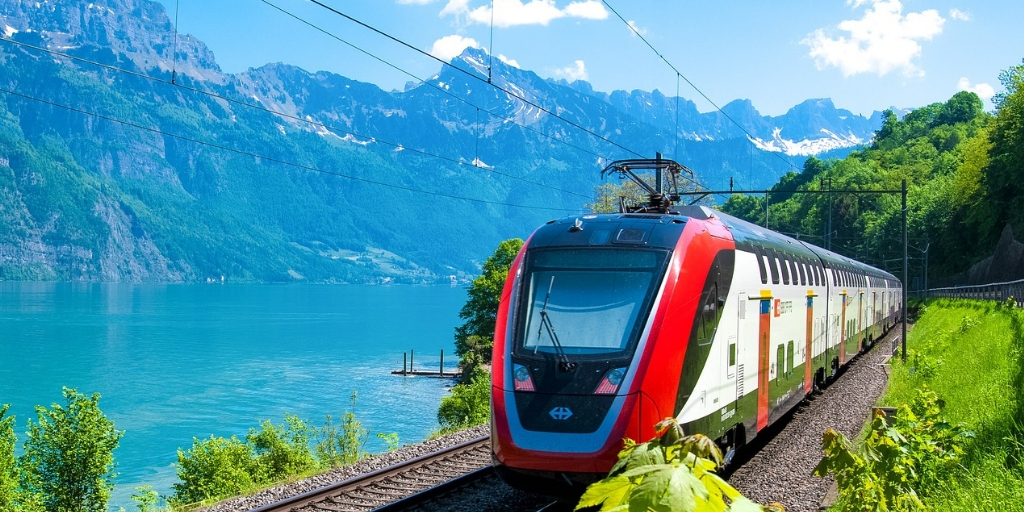
Modern travel often focuses on speed. People want to reach destinations quickly, take photos, visit famous places, and move on to the next city as fast as possible. Airplanes have made the world feel smaller, allowing travelers to cross countries and continents within hours. But somewhere along the way, many people stopped experiencing the journey itself.
Train travel feels different.
Unlike airports, trains move slowly enough for people to actually see the country passing outside the window. Small towns, rivers, farms, forests, mountains, old factories, quiet stations, and ordinary neighborhoods appear naturally during the ride. Instead of jumping from one tourist area to another, travelers begin understanding how a country truly looks and feels between major cities.
Many people who travel by train discover something unexpected. The journey itself often becomes one of the most memorable parts of the trip.
Trains create space for observation, conversation, silence, and patience in ways modern travel rarely allows anymore. They reveal a side of countries that airplanes, highways, and tourist buses often hide.
Seeing the Real Rhythm of a Country
One of the biggest differences between train travel and flying is that trains move through the heart of a country instead of above it.
Airports often look similar everywhere. Large buildings, security lines, bright screens, waiting areas, and crowded terminals create an environment disconnected from local culture. A person could be in Europe, Asia, or South America and still feel surrounded by the same modern airport atmosphere.
Train stations, however, usually feel deeply connected to local life.
Early in the morning, stations fill with students, workers, families, street vendors, tourists, and elderly passengers carrying bags or food containers. The sounds, smells, languages, and energy around the platforms reveal everyday life immediately.
Even before boarding the train, travelers begin experiencing the culture directly.
Once the journey starts, the view outside slowly changes. Large cities fade into suburbs, factories, villages, rivers, farmland, forests, or coastlines. Travelers witness transitions between regions instead of skipping over them.
This gradual movement creates a stronger connection to geography.
In countries like India, train journeys reveal incredible diversity within a single route. One station may smell of chai and fried snacks while another offers coconut water or regional meals wrapped in banana leaves. Languages on signs change. Clothing styles shift. Landscapes transform from crowded cities to green countryside or dry open land.
The train becomes more than transportation. It becomes a moving window into daily life.
The same feeling exists in many parts of the world.
Travelers crossing Japan by train notice quiet countryside villages between futuristic cities. In Italy, trains pass vineyards, coastal towns, and rolling hills that make the country feel alive beyond famous tourist landmarks. In Eastern Europe, older train routes move slowly through forests and forgotten towns that rarely appear in travel advertisements.
These journeys reveal how ordinary people actually live.
One traveler described taking a long-distance train through Vietnam during the rainy season. The train passed rice fields, fishing villages, mountains covered in fog, and children waving near tracks. The traveler later admitted that those scenes outside the window created stronger memories than many tourist attractions.
Train travel slows observation naturally.
Because the journey takes time, people begin noticing details they would normally ignore. Laundry hanging outside homes. Farmers working in fields. Small cafés near stations. Children playing football near railway tracks. Quiet rivers moving through towns.
These moments may seem ordinary, but together they create a much deeper understanding of a country than famous landmarks alone.
There is also something emotionally powerful about physically moving through landscapes instead of flying over them.
A traveler boarding a train in snowy mountains and arriving hours later near warm coastal regions experiences the gradual change in climate, architecture, vegetation, and atmosphere. The country begins feeling real and connected instead of fragmented into isolated tourist spots.
Time itself feels different on trains.
Modern life constantly encourages speed and efficiency. Trains often resist that mindset slightly. Delays happen. Routes curve through countryside. Stops take time. At first, some travelers become impatient. But eventually many people begin relaxing into the slower rhythm.
Instead of treating travel like a race, they start experiencing movement itself.
Trains Create Human Connections
Another reason train travel feels more authentic is because trains place people closer together for longer periods of time.
Air travel often feels isolated despite crowded spaces. Passengers wear headphones, stare at screens, and avoid interaction. Airports can feel emotionally disconnected and stressful.
Train journeys are usually more open and social.
People share compartments, tables, food, stories, and conversations naturally. Even silence feels different because passengers remain part of a shared moving environment for hours.
On long train rides, strangers sometimes speak in ways they never would during short flights.
A student may explain local customs to a tourist. An elderly passenger may recommend foods or hidden places to visit. Families may share homemade snacks with nearby travelers. These small interactions create warmth and unpredictability that make journeys memorable.
In some countries, sharing food on trains feels almost traditional.
Travelers in India often remember strangers offering homemade meals, tea, or snacks during long rides. In parts of Europe, passengers open bread, cheese, fruit, and wine while watching landscapes pass outside the window. Overnight trains in Asia sometimes become quiet temporary communities where people sleep, talk softly, and wake together near sunrise.
These experiences create human connection through travel instead of isolation.
One traveler remembered taking a slow overnight train through Thailand. During the evening, passengers spoke quietly while eating meals bought from station vendors. By morning, strangers who had barely known each other the night before were sharing coffee and discussing destinations while sunlight entered the carriage.
The traveler later described the train ride itself as feeling more authentic than many planned tours.
Train stations also encourage local interaction in ways airports rarely do.
Small stations often sit near real neighborhoods rather than distant isolated zones. Travelers step directly into local streets, cafés, markets, and public spaces immediately after arriving.
This creates smoother transitions into the culture of a place.
In many countries, train stations are emotional spaces filled with reunions, goodbyes, workers commuting daily, students returning home, and travelers carrying stories between cities. Sitting quietly in a station café for an hour can reveal more about local life than expensive tourist experiences.
Even the sounds of trains become part of travel memory.
The rhythm of wheels on tracks. Station announcements in different languages. Vendors walking through compartments selling snacks or tea. Rain hitting train windows during evening journeys. These details create emotional texture around the experience.
Unlike planes, trains also allow people to move freely.
Passengers walk through carriages, visit dining areas, stand near doors, stretch comfortably, or simply watch landscapes from different windows. This physical freedom makes long journeys feel less exhausting and more connected to the environment outside.
Train travel often creates conversations not only with people but also with oneself.
Without constant airport stress or endless driving concentration, travelers sometimes spend hours simply thinking while landscapes pass by quietly. These reflective moments become valuable in a world where silence and slowness are increasingly rare.
The Journey Becomes Part of the Memory
One reason train travel feels authentic is because it makes people experience distance honestly.
Modern air travel removes the feeling of movement between places. A traveler may eat breakfast in one country and dinner in another without understanding the landscapes between them. Trains restore that sense of gradual transition.
The traveler feels the journey physically and emotionally.
Crossing mountains, rivers, forests, deserts, or coastlines by train creates a connection between places that airplanes cannot fully provide. The world feels larger and more textured again.
Some of the most beautiful travel memories happen not at destinations but during moments inside trains.
Watching sunrise over snowy landscapes. Seeing lights appear slowly across villages at night. Drinking tea near a rain-covered window. Falling asleep while hearing distant station sounds. Reading books while forests pass outside silently.
These experiences create a slower form of travel memory that feels deeply personal.
Many travelers also discover that trains reduce the pressure to constantly “perform” tourism.
Airports and fast travel schedules often create stress about maximizing time, taking photos, and rushing between attractions. Train journeys encourage patience instead. People begin appreciating movement itself rather than treating it as wasted time.
This shift changes how countries are experienced emotionally.
A traveler once described taking trains across Switzerland without planning every stop carefully. Some small towns were discovered simply because they looked beautiful from the window. The traveler stepped off, explored quietly for several hours, then boarded another train later.
That flexibility created a feeling of freedom impossible during tightly scheduled travel.
Overnight trains create especially strong memories.
Sleeping while crossing borders or landscapes feels almost magical. Travelers wake up in completely new environments while still carrying the emotional continuity of the journey. Watching sunrise from train windows in unfamiliar regions often becomes unforgettable.
There is also a nostalgic quality to trains.
Even modern high-speed rail systems still preserve something romantic about travel. Old stations, paper tickets, dining cars, platform clocks, luggage racks, and window views connect people to earlier generations of travelers.
Train journeys feel human-sized.
Instead of moving through artificial airport environments disconnected from local culture, travelers remain physically connected to landscapes and communities throughout the route.
This connection changes how countries are remembered.
Years later, travelers may forget exact museum details or hotel rooms, but they often remember train moments vividly. A conversation with a stranger. A mountain appearing suddenly through fog. Fresh bread bought at a station stop. The quiet feeling of crossing countryside during sunset.
These memories remain powerful because trains allow people to experience travel as a continuous living experience instead of a series of disconnected destinations.
In many ways, train travel teaches something modern life often forgets. Not every meaningful experience needs to happen quickly.
Sometimes understanding a place requires moving slowly enough to actually see it.
Leave a Reply