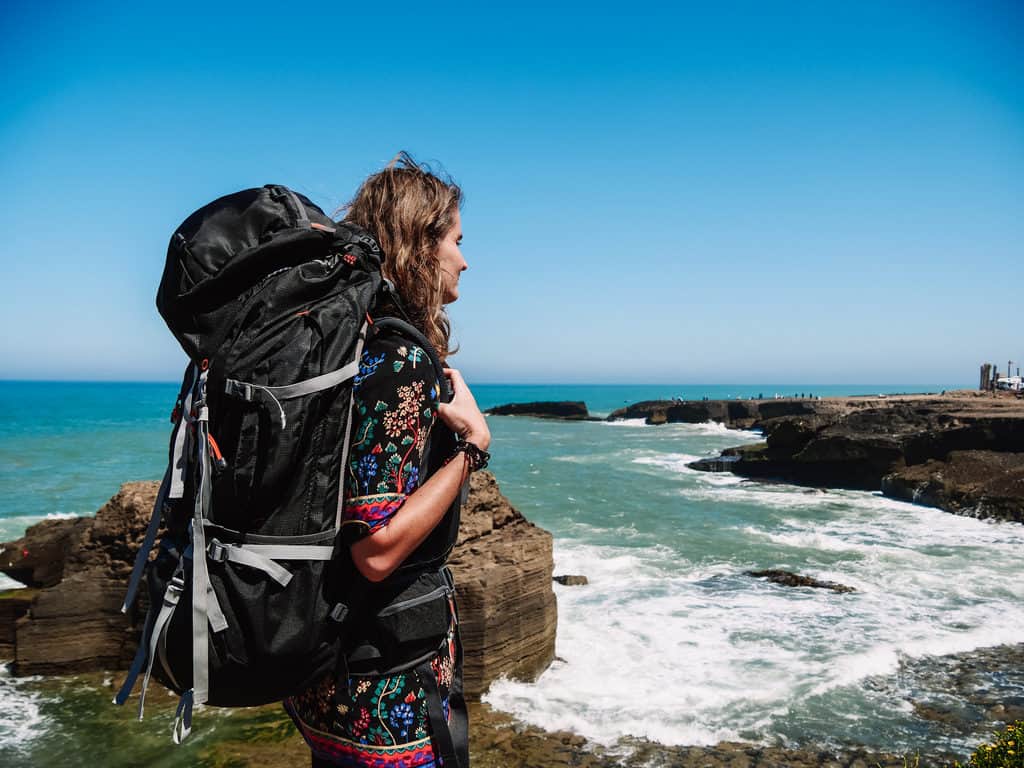
The first time I traveled with only a backpack and a smartphone, I felt strangely nervous. It seemed impossible that everything I needed for days or even weeks could fit into one small bag. Earlier trips usually involved heavy luggage, extra clothes, backup items, printed documents, multiple chargers, and many things I barely used.
Traveling light sounded freeing in theory, but in reality it felt risky at first.
What if I forgot something important? What if I needed extra clothes? What if my phone battery died? What if something went wrong far from home?
Modern life trains people to prepare for every possible situation. We carry extra items “just in case,” download endless information, and try to control every detail before leaving home.
But traveling with only a backpack and a smartphone slowly taught me something unexpected.
Most of the things I thought I needed were not actually necessary.
Over time, lighter travel changed not only the way I moved through the world, but also how I thought about comfort, flexibility, technology, and even daily life itself.
The trip became less about managing possessions and more about experiencing places directly.
Carrying Less Made Travel Feel More Human
One of the first lessons I learned was how much physical luggage affects emotional freedom.
Earlier trips often started with stress. Heavy suitcases created constant problems at airports, train stations, crowded streets, staircases, and public transportation. I worried about losing bags, protecting valuables, finding storage space, and dragging luggage through unfamiliar places.
Travel sometimes felt more like moving equipment than exploring the world.
With only a backpack, everything changed immediately.
I could walk longer distances without exhaustion. Boarding trains became easier. Narrow streets, crowded buses, and small guesthouses stopped feeling difficult. I no longer needed taxis constantly just to manage heavy luggage.
The physical lightness created mental lightness too.
One evening while changing trains in a crowded European station, I noticed travelers struggling with huge suitcases on staircases while I moved easily through the crowd with one backpack. That moment made me realize how often possessions quietly control movement during travel.
Another surprising lesson was how little clothing people actually need.
Earlier, I packed for imagined situations instead of real ones. Extra shoes, too many outfits, backup items, and unnecessary accessories filled luggage quickly. But during backpack travel, I wore the same comfortable clothes repeatedly, washed items when needed, and realized most people never notice or care nearly as much as travelers imagine.
This experience changed my relationship with consumption itself.
Modern culture constantly encourages buying more travel gear, fashion, and accessories. Yet traveling lightly revealed how little actually contributes to meaningful experiences.
Nobody remembers your luggage size while watching sunrise over mountains or sharing conversations with strangers during long train rides.
People remember moments, not possessions.
Backpack travel also made me more adaptable.
Without carrying many “comfort items,” I became less dependent on perfect conditions. Small guesthouses, overnight trains, unexpected weather changes, and spontaneous plan adjustments became easier emotionally because I was already traveling simply.
One traveler I met during a hostel stay explained something similar. The lighter the luggage became, the more flexible the entire journey felt. Last-minute train changes, walking through cities, or staying longer in unexpected places became possible without logistical stress.
Freedom increased because fewer things needed management.
Interestingly, carrying less also reduced decision fatigue.
When everything fits inside one backpack, choices become simpler. Which clothes to wear, what to pack each morning, how to organize belongings — all require less mental energy.
That simplicity creates calm.
Travel began feeling less like constant planning and more like direct experience.
The Smartphone Became Both Useful and Dangerous
Traveling with only a smartphone also revealed how deeply modern technology changed the experience of moving through the world.
The phone became map, camera, translator, guidebook, booking system, notebook, communication tool, music player, banking device, and emergency support system all at once.
In earlier generations, travelers carried printed maps, paper tickets, phrasebooks, travel guides, and physical documents. Today, one small device can replace almost everything.
At first, this felt incredibly empowering.
I could navigate unfamiliar cities instantly, translate menus, book train tickets, find accommodations, communicate with people abroad, and access information anytime. Traveling became easier and less intimidating because help remained available constantly through the phone.
One evening, I became lost in a neighborhood late at night in a foreign city. A smartphone map guided me back safely within minutes. During another trip, translation apps helped me order food and ask for directions despite language barriers.
Technology removed many travel fears.
But over time, I also noticed the hidden downside.
Because the smartphone solved problems so quickly, it sometimes prevented deeper interaction with the world itself.
Earlier travelers often asked locals for directions, discovered places accidentally, or learned patience through uncertainty. With smartphones, it became easy to move through cities while barely engaging with people around me.
I noticed this especially during train rides and quiet moments.
Instead of observing landscapes or speaking with strangers, I often automatically checked messages, social media, or news updates. The phone constantly pulled attention away from the actual journey.
One morning while traveling through rural areas by train, I decided to stop using my phone for several hours except for navigation. The experience immediately felt different. I noticed changing landscapes more carefully, listened to conversations nearby, and paid attention to small details usually hidden behind screen distraction.
The journey itself became richer.
Traveling with only a smartphone taught me that technology is most helpful when used intentionally rather than automatically.
Another important lesson involved dependence.
At one point during travel, my phone battery became dangerously low while I still needed maps and booking information. Suddenly, I realized how vulnerable modern travelers become when one device controls nearly every essential function.
Since then, I became much more conscious about battery management, offline backups, and keeping important information accessible without internet whenever possible.
Technology creates convenience, but it also creates dependency.
Social media also affected travel more than I expected.
At first, constantly photographing and posting travel moments seemed natural. But eventually I noticed something uncomfortable. Sometimes I focused more on documenting experiences than actually living them.
Beautiful streets became photo opportunities. Meals became content. Quiet moments became interrupted by the pressure to capture and share them instantly.
Travel started feeling performative.
One evening while watching sunset near the ocean, I saw dozens of people looking mainly at phone screens while photographing the same view. Very few seemed fully present in the actual moment.
That scene stayed with me.
Afterward, I began using the smartphone more selectively during travel. Fewer photos, less social media, more direct attention to surroundings.
Ironically, the memories became stronger.
Traveling Light Changed How I Think About Life
Perhaps the biggest lesson I learned from traveling with only a backpack and smartphone had little to do with travel itself.
It changed how I think about daily life.
Modern life often becomes crowded with possessions, digital noise, schedules, and unnecessary complexity. Traveling lightly revealed how little people truly need to feel comfortable, capable, and emotionally fulfilled.
Simple routines became enough.
Clean clothes. Safe places to sleep. Good conversations. Warm meals. Curiosity. Movement. Time to notice the world.
These things mattered more than carrying many belongings.
One particularly powerful moment happened after arriving in a small mountain town with almost nothing except basic essentials inside my backpack. The simplicity felt strangely calming.
Without many possessions to manage, attention shifted outward toward experiences themselves — weather, conversations, landscapes, local food, sounds, and human interaction.
The journey became mentally lighter too.
Backpack travel also taught adaptability.
Plans changed constantly during the trip. Trains were delayed. Weather shifted unexpectedly. Accommodation changed. Yet because I traveled simply, adapting became easier emotionally.
Heavy expectations often create travel stress more than actual difficulties do.
Traveling light reduced attachment to perfect plans.
Another lesson involved trust.
Earlier, I often overprepared because uncertainty felt uncomfortable. But traveling with fewer possessions forced me to trust that most problems could be solved along the way.
And usually they could.
Forgotten items could be replaced. Directions could be found. Unexpected situations became manageable. Humans are far more adaptable than they often believe.
This realization created confidence beyond travel itself.
I also became more aware of how consumption shapes identity.
Many people unconsciously connect security and comfort with owning more things. But backpack travel challenged that assumption directly. Carrying fewer possessions often felt more freeing than restrictive.
Experiences became richer because attention no longer stayed trapped in managing objects constantly.
Interestingly, some of the happiest travelers I met carried very little.
They moved slowly, stayed flexible, spoke with strangers easily, and seemed emotionally open to unpredictability. Simplicity created space for spontaneity.
Traveling with only a backpack and smartphone also revealed the strange balance between freedom and dependence in modern life.
Physically, I felt freer than ever because I carried so little. Digitally, however, I realized how dependent modern humans became on one small device for navigation, memory, communication, entertainment, and security.
That awareness changed my relationship with technology permanently.
I no longer view constant connectivity as automatically positive.
Sometimes the most meaningful travel moments happened precisely when the phone stayed inside the backpack — during long walks, conversations with strangers, quiet meals, or silent train journeys where attention fully belonged to the present moment.
In the end, traveling with only a backpack and smartphone taught me something surprisingly simple.
Most meaningful experiences require far less than people imagine.
People need curiosity more than possessions. Presence more than constant documentation. Flexibility more than perfect planning.
A backpack carried the essentials. A smartphone connected me to the modern world.
But the most valuable parts of the journey usually happened in the spaces between those things — in moments when life felt temporarily lighter, simpler, and more open to the unexpected.
Leave a Reply